-1.png?width=1600&height=900&name=BlogHeader%20(4)-1.png)
For CDL drivers, understanding Hours of Service (HOS) regulations is about more than avoiding violations; it’s about protecting safety, preventing fatigue, and keeping operations running smoothly. Whether you’re a driver managing long shifts or a carrier responsible for compliance, staying current on HOS rules is critical in today’s trucking environment.
The Federal Motor Carrier Safety Administration (FMCSA) created HOS regulations to limit driving time and ensure drivers get adequate rest between shifts. These rules are designed to reduce fatigue-related crashes and improve roadway safety across the transportation industry.
You can review the full FMCSA Hours of Service fact sheets here.
What Are Hours of Service Rules?
Hours of Service rules are federal regulations that govern how long commercial motor vehicle drivers can drive and work before taking mandatory breaks or off-duty time.
For most property-carrying CDL drivers, the current FMCSA regulations include:
- 11-hour driving limit after 10 consecutive hours off duty
- 14-hour on-duty limit before a driver must take time off
- 30-minute break requirement after 8 cumulative hours of driving
- 60/70-hour weekly limits depending on carrier operations
- 10 consecutive hours off duty between shifts
These regulations apply to most interstate commercial drivers operating vehicles that require a CDL.
Understanding the 11-Hour Driving Rule
One of the most well-known HOS regulations is the 11-hour driving limit. Drivers may operate for a maximum of 11 hours after taking 10 consecutive hours off duty.
It’s important to note that the 11-hour limit only applies to actual driving time. Activities such as fueling, inspections, loading, unloading, or waiting at a shipper count as on-duty time but not driving time.
The 14-Hour On-Duty Window
Even if a driver has not reached 11 hours of driving time, the 14-hour rule can still prevent them from continuing to drive.
Once a driver comes on duty, a 14-hour clock begins. After that 14-hour window expires; driving is no longer permitted until the driver takes the required off-duty period.
This rule often creates challenges for drivers dealing with:
-
Delays at the docks
- Heavy traffic
- Weather conditions
- Long wait times during loading or unloading
Understanding how to manage the 14-hour window efficiently is essential for maintaining compliance and maximizing productivity.
30-Minute Break Requirements
FMCSA regulations require drivers to take a 30-minute break after 8 cumulative hours of driving time. The good news is that the break does not necessarily need to be fully off duty.
The current rules allow the break requirement to be satisfied using:
-
Off duty-time
- Sleeper berth time
- On-duty, not-driving time
This flexibility was added as part of FMCSA’s updated HOS regulations to help drivers better manage their schedules while maintaining safety standards.
Sleeper Berth and Split-Sleeper Rules
The sleeper berth provision can be one of the most confusing parts of HOS compliance.
Under current regulations, drivers can split their required off-duty time into two qualifying periods, provided certain conditions are met. These rules were updated to provide more flexibility while still addressing driver fatigue concerns.
Because split-sleeper calculations can become complicated quickly, many fleets rely heavily on ELD systems and safety teams to help drivers stay compliant.
Why HOS Compliance Matters
Hours of Service violations can lead to:
-
DOT citations
- CSA score impacts
- Out-of-service orders
- Increased insurance costs
- Higher liability exposure
More importantly, HOS compliance plays a major role in reducing driver fatigue, one of the leading contributors to serious trucking accidents.
The financial impact of HOS violations can also be significant in litigation. In transportation-related negligence cases, Hours of Service violations are associated with some of the highest median award amounts compared to other types of negligence.
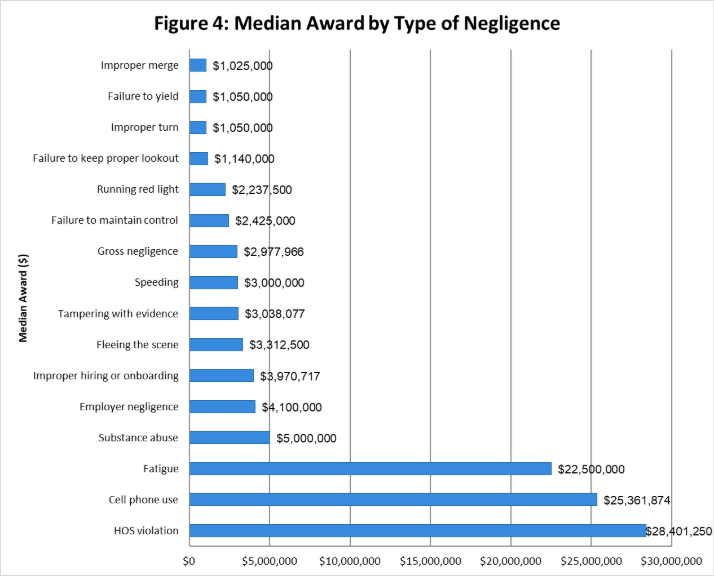
As enforcement continues to focus heavily on driver logs and ELD records during inspections, carriers and drivers alike need to prioritize education and consistency around HOS management.
Common HOS Mistakes Drivers Make
Even experienced CDL drivers can run into compliance issues. Some of the most common mistakes include:
-
Forgetting to account for on-duty time
-
Misunderstanding split-sleeper calculations
-
Missing required breaks
-
Incorrect ELD status changes
-
Exceeding the 14-hour window due to delays
-
Failing to properly document adverse driving conditions
Many violations happen unintentionally, which is why ongoing training and communication are so important.
How TransForce Supports Hours of Service Compliance
At TransForce, safety and compliance are a core part of our operation. We prioritize ongoing Hours of Service training and education for our drivers to help ensure they understand current regulations, ELD requirements, and best practices for staying compliant on the road.
Our safety team works closely with drivers and carrier partners to provide guidance, answer questions, and support safe operations every day.
If you have questions or concerns related to Hours of Service regulations or compliance practices, you can reach out to our Safety team at safety@transforce.com.
Final Thoughts
Hours of Service regulations can feel complicated, especially as rules evolve and operational demands increase. But understanding the basics and staying proactive about compliance helps protect drivers, carriers, and everyone sharing the road.
Strong HOS management is not just about avoiding violations. It plays an important role in improving safety performance, reducing operational risk, and building a stronger, more resilient operation overall.
Source: FMCSA Hours of Service (HOS): https://www.fmcsa.dot.gov/regulations/hours-of-service