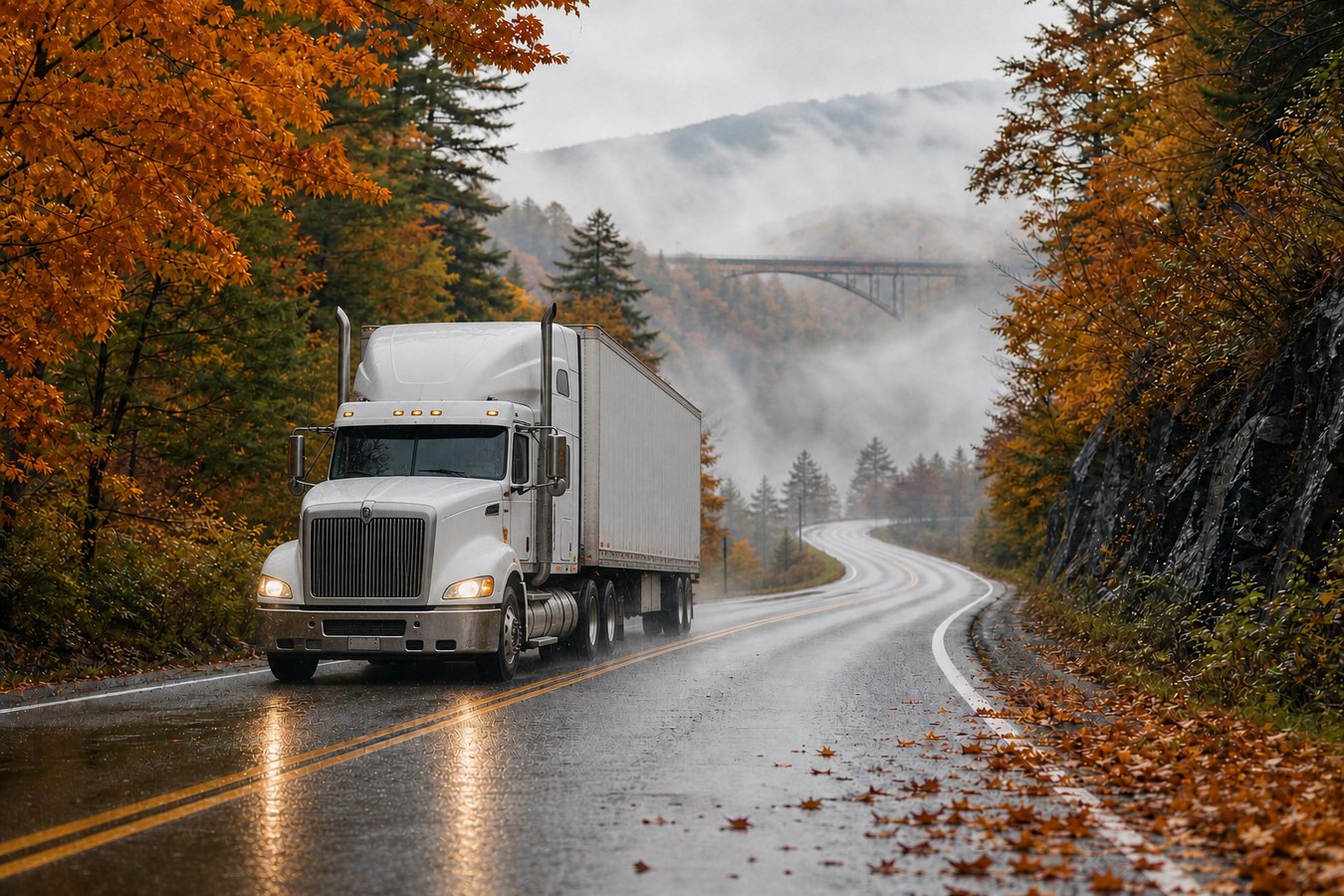
Fall brings changing road conditions that can make familiar routes more challenging. Rain, wet leaves, fog, and shorter daylight hours can affect traction and visibility, especially during early morning and evening trips.
October’s In the Safety Zone newsletter focuses on recognizing these seasonal hazards and adjusting driving habits to help keep drivers and everyone sharing the road safe.
Watch for Wet Roads and Slippery Surfaces
Fallen leaves can become slippery when wet, reducing tire traction and increasing stopping distances. Rain and standing water add to the challenge, making it harder to maintain control during turns or sudden braking.
Pay attention to conditions throughout your route, including bridges, shaded roadways, parking lots, and loading areas. Moisture, leaves, and debris can create hazards in places where drivers may not expect them.
Adjust your speed for conditions, allow extra following distance, and stay alert for changes in the road surface.
Adjust for Reduced Visibility
Fog, rain, and low light can make it harder to spot pedestrians, cyclists, work zones, and other vehicles. When visibility decreases, give yourself more time to recognize and respond to hazards.
Use headlights appropriately, reduce your speed, and increase your following distance. Keep windshields and mirrors clean, and avoid distractions that take your attention away from the road.
Prepare for Earlier Darkness
As daylight hours become shorter, more driving takes place at dawn, dusk, or after dark. These conditions call for extra attention to visibility, fatigue, and potential hazards along the roadway.
Include lights in your pre-trip inspection, keep headlights and taillights clean, and report damaged lights or reflectors promptly. Watch for wildlife near the road and adjust your speed as conditions change.
See and Be Seen
Visibility matters outside the truck, too. Wear high-visibility gear when outside the vehicle and use reflective warning devices when required. Clean windows, working lights, and intact reflectors help you see your surroundings and help other motorists see you.
Preparing for seasonal hazards is part of every safe trip. By staying alert, maintaining visibility, and adapting to changing conditions, professional drivers help protect themselves and the communities they travel through.
Safe drivers adapt to changing conditions.